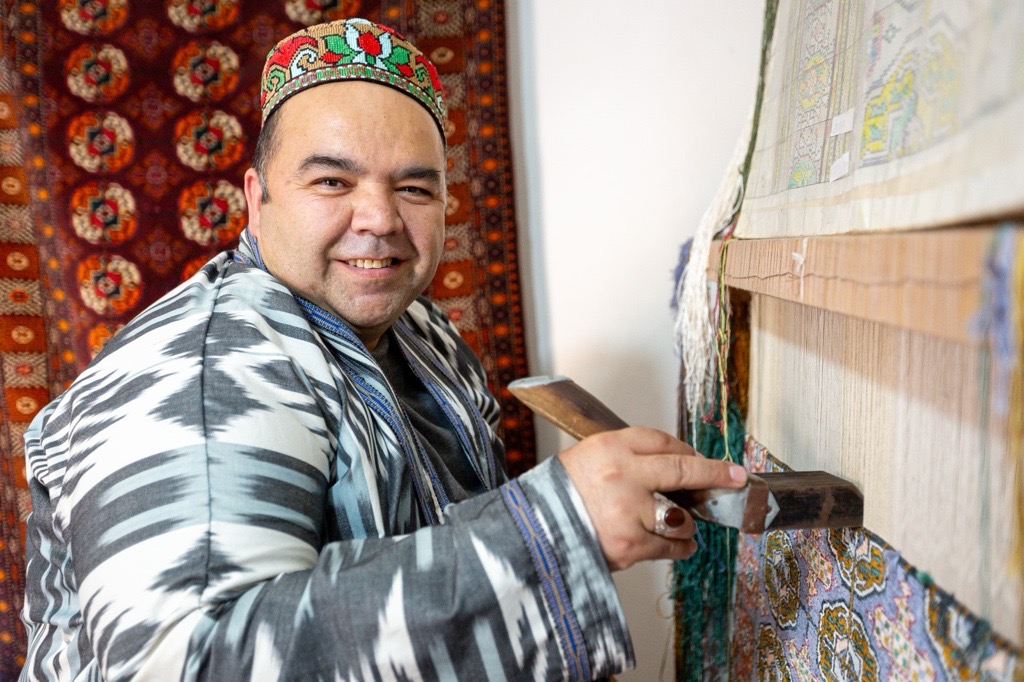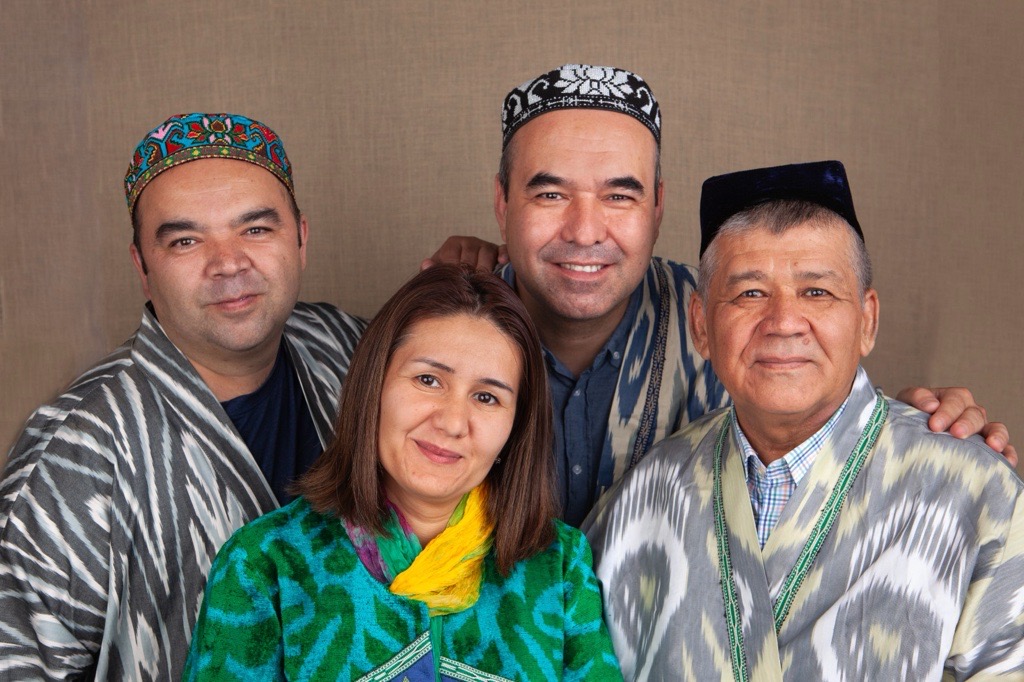

While traveling through Bukhara, Uzbekistan, I had one of those unexpected encounters that makes travel so meaningful. I met Ikhtiyor Kendjaev, a master carpet weaver whose family has carried the traditions of carpet making across generations.
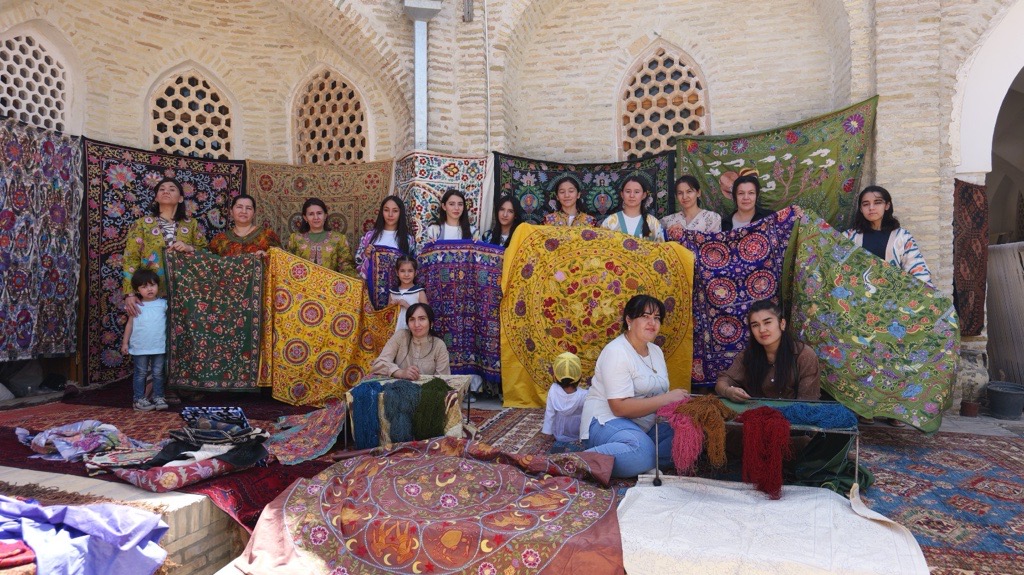
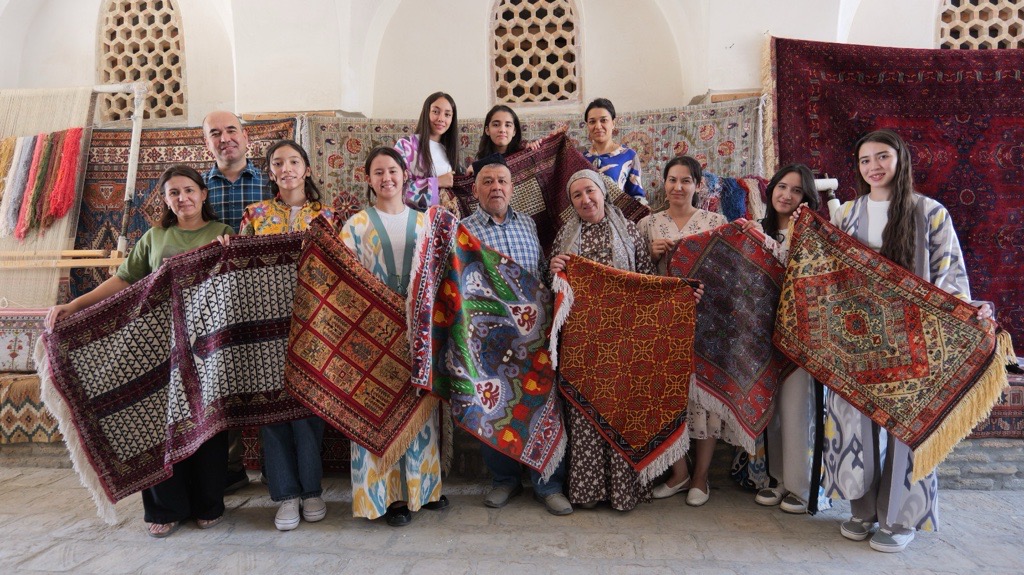
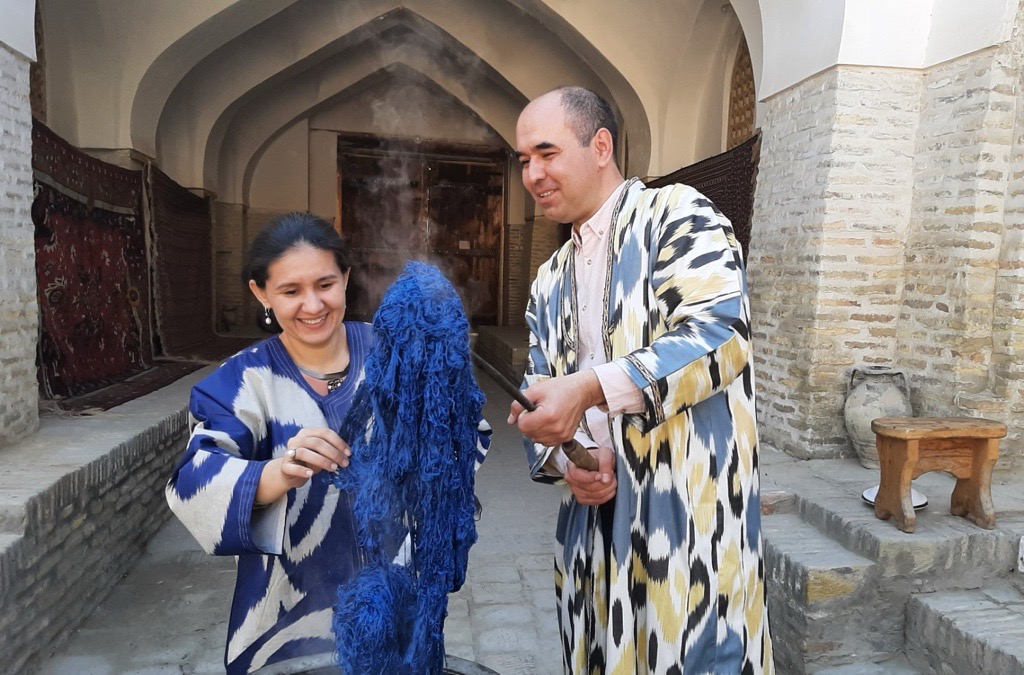
Ikhtiyor welcomed me into his world of weaving and shared the story behind his craft. He began helping his grandfather weave and dye carpets when he was just 11 years old. Today, Ikhtiyor works with a team of artisans at the School of Traditional Carpet Weaving, Embroidery & Natural Dyeing, where they create handmade silk and wool carpets, traditional embroidery, and natural dyes using techniques passed down through generations.
Established in 2001 with support from UNESCO, the school was founded to revive and preserve traditional crafts at risk of disappearing. Its work extends beyond creating beautiful textiles: artisans research historical designs, teach apprentices, and help ensure that Bukhara’s cultural heritage remains a living tradition.
As Rustam Abdullaev, a researcher, natural dyer, carpet weaver, and interpreter at the school, explained, “Traditional craftsmanship is much more than making beautiful objects. It preserves our cultural memory, strengthens our identity, creates livelihoods, and builds connections between people and communities.”
The intricately crafted patterns in Bukhara’s carpets are more than beautiful designs. Their colors, symbols, and techniques reflect generations of Central Asian craftsmanship, connecting the artisans who create them today with those who came before.
But what touched me most about meeting Ikhtiyor was discovering that his story was connected to something very familiar to me: Sister Cities.
As we spoke, I learned about his connection to Santa Fe, New Mexico, and the Sister Cities relationship between Santa Fe and Bukhara. Since 2005, members of the Bukhara artisan community have participated in the Santa Fe International Folk Art Market, sharing their traditional crafts with international audiences and introducing visitors to the stories behind their work. In 2025, the two cities celebrated the 40th anniversary of their Sister Cities relationship.
For Rustam and his fellow artisans, these connections are about much more than displaying or selling handmade textiles. They create opportunities to share knowledge, build relationships, and introduce new generations to traditional crafts.
“When someone encounters one of our carpets or embroidered textiles, they may first notice its colors and patterns,” Rustam shared. “But when we explain how the fibers are prepared, how natural dyes are made, and how the designs connect to the history of Bukhara, the object becomes something more: a story about our families, our city, and the generations of artisans who came before us.”
That story extends beyond the workshop. The school offers free introductory training in carpet weaving, embroidery, and natural dyeing, giving apprentices access to tools, materials, and experienced masters. By helping young artisans develop their skills and find opportunities to sell their work, the school supports both cultural preservation and local livelihoods.
International partnerships can help sustain these efforts. Through the Santa Fe International Folk Art Market and related cultural activities, Bukhara’s artisans can reach new audiences, share their expertise, and demonstrate the enduring value of traditional craftsmanship. These exchanges also encourage younger generations to see their cultural heritage as something they can carry forward and build a future around.
Here I was, thousands of miles from home, learning about a Sister Cities connection that has helped support and celebrate the cultural heritage of a community I had only just begun to discover. It was a beautiful reminder that Sister Cities relationships are not simply agreements between cities. They create opportunities for people to encounter one another, share traditions, and discover connections that might otherwise never happen.
As Rustam reflected, the relationship connects the two cities “not only through official ties, but through artisans, students, visitors, and people who believe that cultural heritage should be shared and preserved.”
The experience stayed with me long after I left Bukhara. It was especially meaningful to see firsthand how these partnerships can live beyond official programs and exchanges– in artists’ workshops, cultural traditions, friendships, and unexpected moments of connection.
Ikhtiyor’s carpets tell stories through color, pattern, and generations of knowledge. And my unexpected meeting with him gave me another story to carry home: a reminder that sometimes the most meaningful international connections are the ones you never set out to find.
Rebbe Bernstein, Program Manager, Sister Cities International
Story and photos provided by Ikhtiyor Kendjaev and Rustam Abdullaev, School of Traditional Carpet Weaving, Embroidery & Natural Dyeing, Bukhara, Uzbekistan.
Interested in a traditional handmade carpet or learning more about Bukhara’s rich weaving traditions? Reach out to master carpet weaver Ikhtiyor Kendjaev to explore his work and craftsmanship!
Contact Ikhtiyor Kendjaev
- Email: [email protected]
- Phone: +998 90 715-74-04
- Shop: Shop of Carpets, Hats, Hand Embroidery & Natural Dyes
- Address: Hakikat St. 2, Trade Dome; Tashkentskaya St. 2, Bukhara, Uzbekistan